The True Cost of Cheap Knife Sharpening Options
2026-07-20 · Emile
You’re standing there, staring at a pile of blunt knives. Maybe it’s a stack of Wüsthofs after a big weekend cook-up, or your trusty Global chef's knife that's just not cutting it anymore. You need them sharp, and you need them sharp *now*. So, you start looking around.
Maybe you’ve seen those pop-up knife sharpening kiosks at the local shopping centre. Or perhaps you're eyeing off a cheap bench grinder at Bunnings, thinking you can DIY. They promise speed and convenience, and often a low price. But let’s cut through the noise for a minute, because when it comes to sharpening a good knife, there's a big difference between "quick and cheap" and "done right."
As someone who's seen many knives come across my bench, I can tell you that not all sharpening is equal. In fact, some methods do more harm than good. Let's break down your options and talk about what really happens to your blade.
The "While-You-Wait" Promise: Quick Fix or Quick Ruin?
Those mall kiosks or weekend market stands are tempting. You drop off your knives, grab a coffee, and pick them up supposedly sharp. Sounds great, right? On the surface, it’s convenient and often cheap – maybe $5-$10 a knife. But convenience often comes at a cost to your knives' longevity and performance.
The Problem with Speed and Dry Grinding
Most of these quick-fix operations rely on high-speed, dry grinding wheels. They’re fast, which is why they can get your knives "done" in moments. But speed and dryness are the sworn enemies of good knife steel.
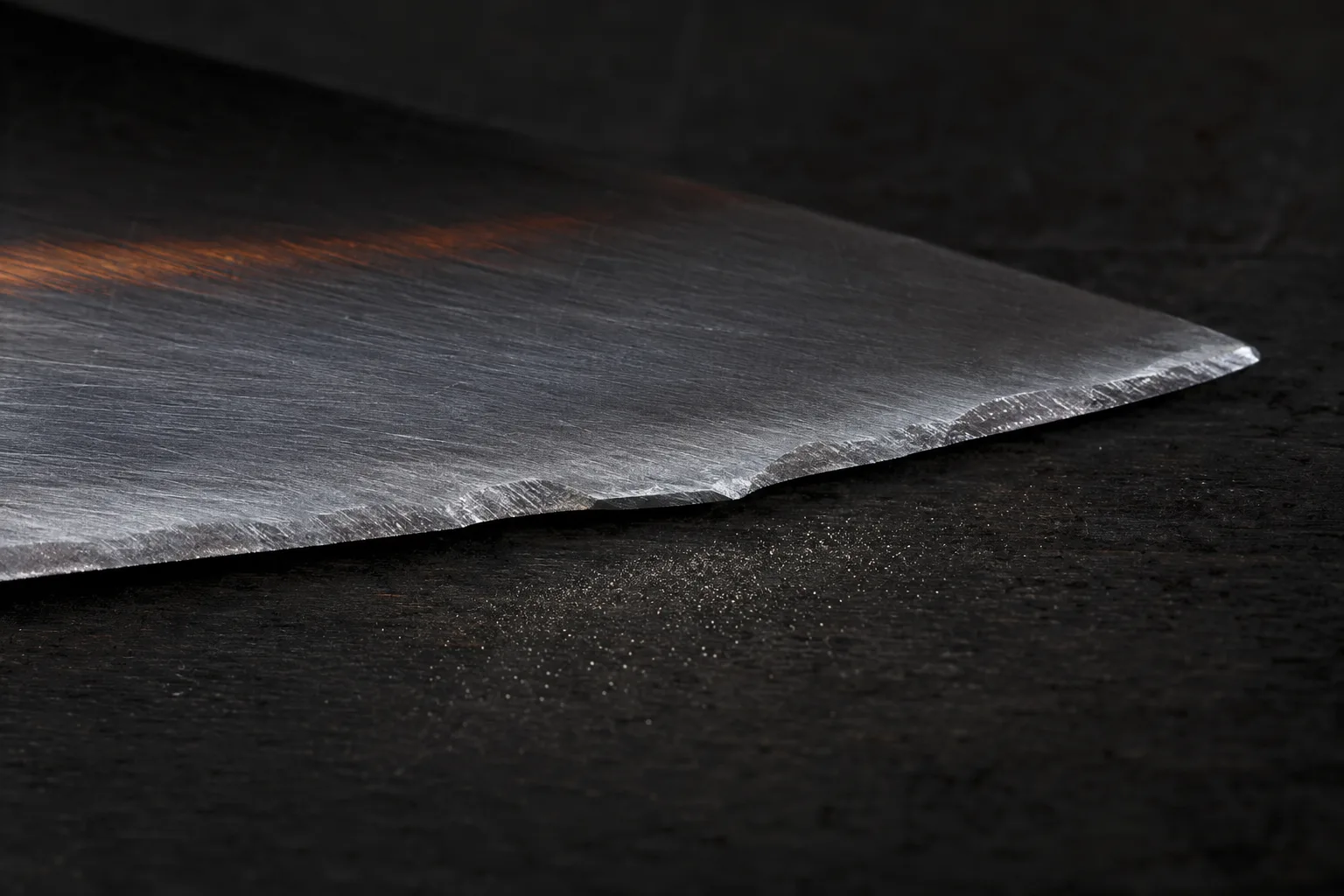
When you grind steel quickly without cooling, it heats up. And I mean *really* heats up. You’ll see sparks flying, which looks impressive, but it’s actually a terrible sign. That heat can push the knife's edge past its tempering temperature. The factory heat treatment that makes your expensive Shun or Global knife hold an edge is completely undone. What you get is a "soft" edge that might feel sharp initially, but it’ll dull again almost immediately. It’s like buying a brand new car and then punching a hole in the engine block – it might still drive for a bit, but it’s ruined.
This isn't just about cheap knives either. I’ve seen countless high-quality knives come through my workshop with tell-tale signs of heat damage – discoloured edges, chips, and a complete inability to hold an edge. Once that heat treatment is gone, it's gone for good. You can resharpen it a hundred times, but it will never be the same knife again.
Inconsistent Angles and Blade Loss
Another major issue with these quick services is the lack of precision. Most rely on freehand grinding, or very basic jigs that aren't properly set. This means the angle of the edge is inconsistent, often rounded or scalloped. Instead of a crisp, straight bevel, you get a wavy mess. This not only makes the knife perform poorly but also removes a lot more steel than necessary to achieve "sharpness."
Every time you sharpen a knife, you remove a tiny amount of steel. A good sharpening service minimises this to prolong the life of your knife. A quick-fix grinder, especially one taking shortcuts, will chew through your blade material, drastically reducing its lifespan. That $10 sharpening suddenly looks a lot more expensive when you realise it's taken years off your $200 chef's knife.
DIY Disaster: Hardware Store Sharpeners
The other tempting option is to buy a cheap bench grinder or a pull-through sharpener from the hardware store. "I can do it myself," you think. And technically, you can. But should you?
The Illusion of Control
A basic bench grinder, even one with a wet wheel, requires significant skill and experience to use properly for knife sharpening. Maintaining a consistent angle freehand is incredibly difficult, even for seasoned pros. Without an angle jig, you're almost guaranteed to get an uneven edge, or worse, grind away too much material in one spot, creating a "belly" or flat spot where there shouldn't be one.
And those cheap pull-through sharpeners? Forget about it. They might seem handy for a quick touch-up, but they often use abrasive carbides or ceramic wheels that aggressively strip metal away at a fixed, often unsuitable, angle. They create micro-serrations rather than a truly sharp edge, and they're terrible for maintaining the correct geometry of a good knife. They're fine for a cheap utility knife you don't care about, but they'll ruin the edge of anything decent.
Why They Don't Cut It for Quality Blades
Just like the dry grinders at kiosks, DIY methods often suffer from the same heat damage issues if you're not careful. And even if you manage to keep the heat down, the lack of precision means you're almost certainly taking off more steel than needed, and creating an edge that won't perform as it should. Your expensive Japanese knives, with their precise bevels and harder steels, are particularly vulnerable to these amateur approaches.
For kitchen scissors, hunting knives, or even kitchen utility knives, these methods are equally problematic. They can misalign blades, create inconsistent edges, and shorten the tool's life. It's a false economy.
The SharpenIt Difference: Professional Water-Cooled Sharpening
So, what's the alternative? How do you get a truly sharp knife without ruining it? The answer lies in the method: slow, water-cooled grinding with a precision angle jig, followed by a proper honing and polishing process.
This is the same technique trusted by professional knife makers, butchers, woodworkers, and even surgical-tool manufacturers. It's not about speed; it's about precision and preserving the integrity of the steel.
No Heat, No Damage: Protecting Your Steel
Our setup uses a slow-turning, water-cooled wheel. This is crucial. The water continuously cools the blade as it's being sharpened, ensuring that the edge never gets hot enough to damage the factory heat treatment. You won't see sparks flying off our machines because there's no excessive friction. This means your knife's steel retains its original hardness and flexibility, allowing it to hold an edge for much longer. It's the only way to genuinely restore a knife's edge without shortening its life.
Precision Every Time: The Angle Jig
Forget freehand guesswork. We use a consistent-angle jig that holds your blade firmly at the exact angle required for a perfect bevel. Every pass is precise, flat, and even. This isn't just about getting it sharp this one time; it ensures that the geometry of your blade is maintained for future sharpenings. There’s no over-grinding away precious blade material. This precision approach is what keeps your expensive knives like performing at their peak, year after year.
Beyond "Just Sharp"
"Sharp" and "razor sharp" are two different things. We finish every knife by hand on a leather honing wheel with polishing compound. This step refines the edge further, removing any microscopic burrs left by the grinding process and polishing the bevel to a true razor edge. This is the difference you feel when your knife glides through a ripe tomato without resistance, or cleanly slices through delicate herbs. It's the final touch that makes a professional sharpening truly professional.
We handle all kinds of knives, from standard chef's and paring knives to heavy cleavers, fishing knives, hunting knives, and even kitchen scissors. The only blades we don't sharpen are bread knives and other serrated edges – they require a different process that we don't currently offer.
The Real Cost of "Cheap" Sharpening
When you weigh up the initial cost, a $10 kiosk sharpen might seem cheaper than our transparent per-knife pricing (which starts at $15 for standard kitchen knives). But consider the hidden costs:
- **Irreversible Damage:** A ruined heat treat on a good knife means it will never hold an edge properly again. You've essentially downgraded your premium knife to a cheap one.
- **Blade Loss:** Excessive grinding reduces the life of your knife. You'll need to replace it sooner.
- **Poor Performance:** An inconsistent or soft edge makes cooking harder and less enjoyable. It's frustrating to use a knife that struggles with basic tasks.
- **Safety:** A dull or poorly sharpened knife is more dangerous than a sharp one, as it's more likely to slip.
The "cheap" option can end up costing you significantly more in replacement knives and ongoing frustration. Investing in proper sharpening protects your tools, extends their life, and ensures they perform as they were designed to.
How to Get Your Knives Properly Sharp
Don't let your valuable knives suffer at the hands of quick-fix operators or DIY attempts. Whether you're in Lake Macquarie and can take advantage of our local pickup service (5-knife minimum + $25 fee), or anywhere else in Australia, our mail-in service makes professional sharpening easy. We'll send you a prepaid satchel, you drop your knives at AusPost, and we send them back sharp.
It's about getting the job done right, the first time, protecting your investment, and bringing your blades back to a genuine razor edge. Stop fighting with blunt knives and get them properly sharpened.
Ready to experience the difference? Order your professional knife sharpening today.