Garden Shears & Secateurs: Sharp Tools, Healthier Plants
2026-07-24 · Emile
If pruning leaves your hand aching and the cut ends of your plants looking chewed rather than cut, your tools are telling you something. Blunt garden shears don't just make the work harder — they're genuinely worse for the garden. Here's why sharp matters outdoors, and how to get your shears, secateurs and loppers back to cutting the way they did new.
Blunt tools hurt plants, not just hands
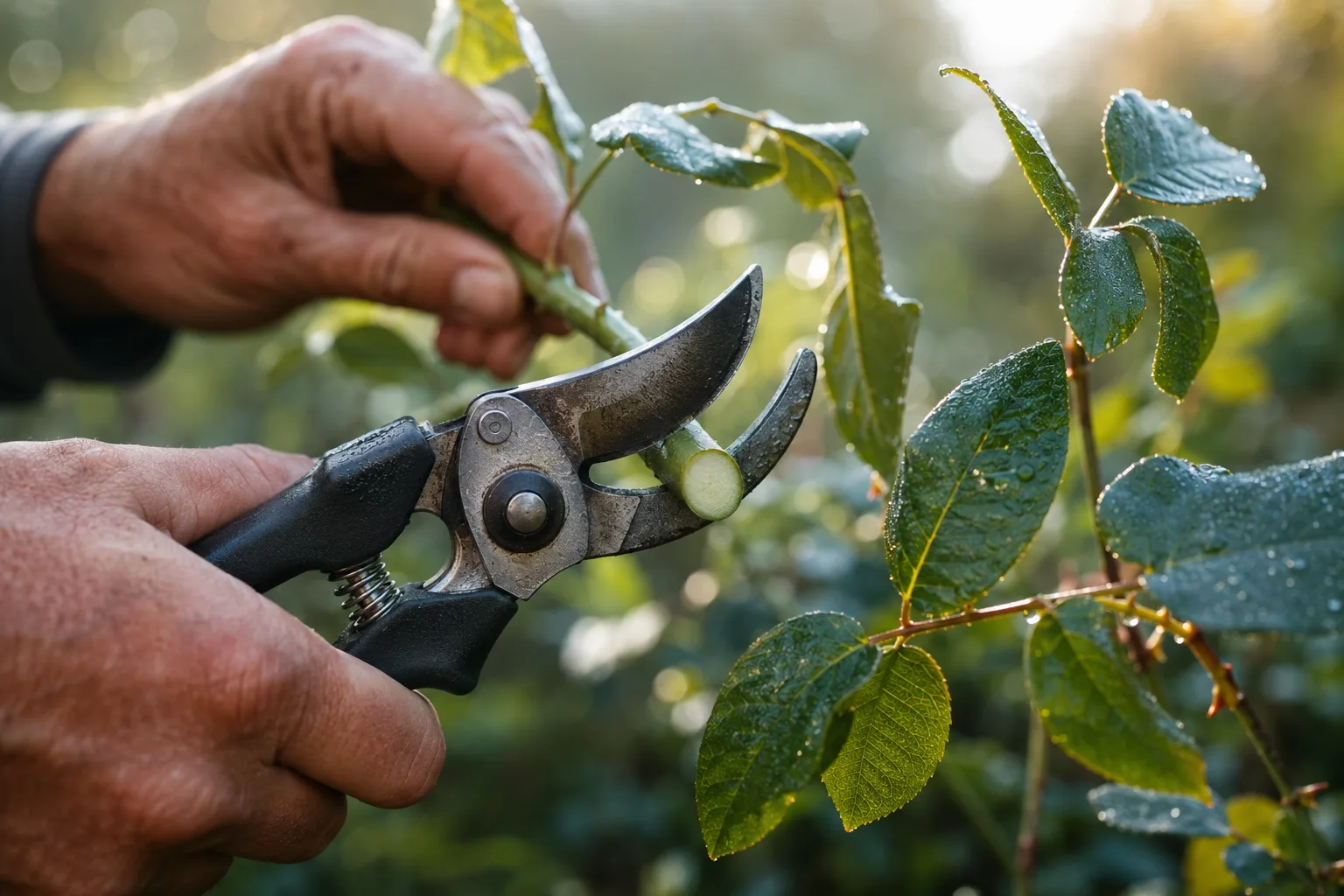
Secateurs and bypass shears are designed to slice cleanly through a stem, leaving a smooth wound that the plant seals quickly. When the blade is dull, it crushes before it cuts — tearing the bark, bruising the tissue underneath, and leaving a ragged wound that stays open longer. Gardeners know the result: dieback on the pruned stem, and a bigger doorway for disease. A clean cut from a sharp blade is the single cheapest thing you can do for plant health at pruning time.
There's a human cost too. A dull bypass tool needs two or three times the hand force, which is exactly how a long pruning session turns into a sore wrist. Sharp tools are safer for the same reason sharp knives are — they go where you aim them, without the lunge.
Why garden tools are tricky to sharpen at home
- Bypass blades are single-bevel. Secateurs and bypass loppers sharpen on one side only, at the factory angle. Grind the flat side or round the bevel and the blades stop meeting properly — then nothing cuts, no matter how sharp each blade feels.
- The blades have to pass close. Sharpening changes geometry; without easing the burr correctly and checking the pivot, you get a tool that snags or folds stems between the blades.
- Sap and rust hide the edge. Hardened sap behaves like glue on the blade face. Cleaning it back matters as much as the grind.
- Dry grinding cooks the steel. Same story as knives and chisels: a fast dry wheel overheats the thin edge in seconds, and an overheated edge won't hold through a season.
How we do it
Garden shears, secateurs and loppers go across the same slow, water-cooled wheel as everything else in the workshop — the steel stays cool and keeps its temper, and the jig keeps the factory bevel angle instead of a freehand guess. We sharpen the bevel side, ease the burr off the flat, and check the blades meet cleanly through the whole stroke. Axes, hatchets and wood chisels get the same treatment, each profiled for its job.
What it costs and how to send them
Garden shears, secateurs, loppers and axes are $20 per edge — book them as heavy on the order form. Anywhere in Australia, we post you a prepaid, tracked satchel: wrap each blade, seal it, drop it at any AusPost outlet — the mail-in process explained. Around Lake Macquarie we can collect and return instead. Long-handled loppers won't fit a satchel, but detachable heads and blades travel fine — check with us if you're not sure what to send.
And since the satchel's already paid for, most people take the chance to send the kitchen knives too — $15 each, full details on the pricing page. If you know a gardener whose shed is full of blunt tools, a gift card solves that birthday.
Between sharpenings
- Wipe blades after each session — eucalyptus sap sets hard; a rag with a little eucalyptus oil or metho shifts it before it bakes on.
- Don't twist as you cut — twisting springs the blades apart, and sprung blades chew even when sharp.
- Match the tool to the branch. Forcing secateurs through thumb-thick wood bends the pivot; that's what loppers and saws are for.
- A drop of oil on the pivot keeps the action smooth and the effort where it belongs — in the cut.
Prune with a properly sharpened tool once and the difference is obvious — in your hand, and in how the garden looks a fortnight later.