Sharpening Kitchen Knives: How Often Do Home Cooks Need It?
2026-07-19 · Emile
How Often Do Home Cooks Really Need Knife Sharpening?
Sarah's a busy mum. Every night, after school pick-up and homework battles, she's back in the kitchen, chopping vegetables for dinner. Think stir-fries, big salads, roast veggies – anything that requires a lot of knife work. She uses her trusty chef's knife for just about everything. Lately, she's noticed it's not quite gliding through that capsicum like it used to. The tomato skins are starting to resist, and slicing an onion feels more like tearing. She's wondering, "How often do I *really* need to get this thing sharpened?"
It's a question we get a lot. There's no single answer, because everyone cooks differently. But after seeing many knives come through the workshop, we can give you some solid, realistic numbers. Forget the marketing fluff that tells you to sharpen weekly. That's just not how it works for most Australian kitchens.
What Dulls Your Knife Edge – And How Fast
Before we talk about sharpening frequency, it’s worth understanding what makes a knife dull in the first place. It’s not just magic; it’s physics. Your knife edge is incredibly thin – essentially two microscopic ramps meeting at a point. Anything that bends, rolls, or wears down that point will dull the knife.
The Big Culprits:
- Cutting Boards: This is the number one killer of sharp edges. A soft wooden or high-density plastic board will be kind to your knife. Glass, ceramic, stone, titanium or even cheap, flimsy plastic boards will chew through your edge in no time. Every cut on a hard surface rolls or chips that delicate edge.
- Frequency of Use: This one's obvious. Someone slicing one onion a week will need sharpening far less often than someone prepping a full family meal every night. More cuts mean more opportunities for microscopic damage.
- What You Cut: Are you mostly slicing soft fruits and vegetables? Or are you routinely hacking through root vegetables, pumpkin, or even jointing chickens? Denser, harder foods put more stress on the edge.
- Honing Habits: A good honing steel (or ceramic rod) doesn't sharpen your knife, but it realigns the microscopic edge that gets bent or rolled with use. Regular honing can significantly extend the life of your professionally sharpened edge. Think of it like combing hair – it straightens tangles, but doesn't cut it shorter.
- Blade Material and Geometry: A tough, thick German chef's knife (like a Wüsthof or Victorinox) will often hold a working edge longer under rougher conditions than a super-thin, harder Japanese blade (like a Shun). The harder Japanese steels can take a keener edge, but they can also be more prone to micro-chipping if mistreated.
- Storage: Throwing knives into a drawer to rattle against other utensils is a fast track to a dull, damaged edge. Use a knife block, magnetic strip, or blade guards.
Understanding these factors helps you reduce the need for sharpening, but eventually, every knife will need a proper sharpen.
Signs Your Knives Are Ready for a Professional Edge
You don't need a microscope to tell if your knife is dull. There are practical, everyday tests you can do. If you're seeing any of these, it's time to get that knife professionally sharpened.
The Tomato Test:
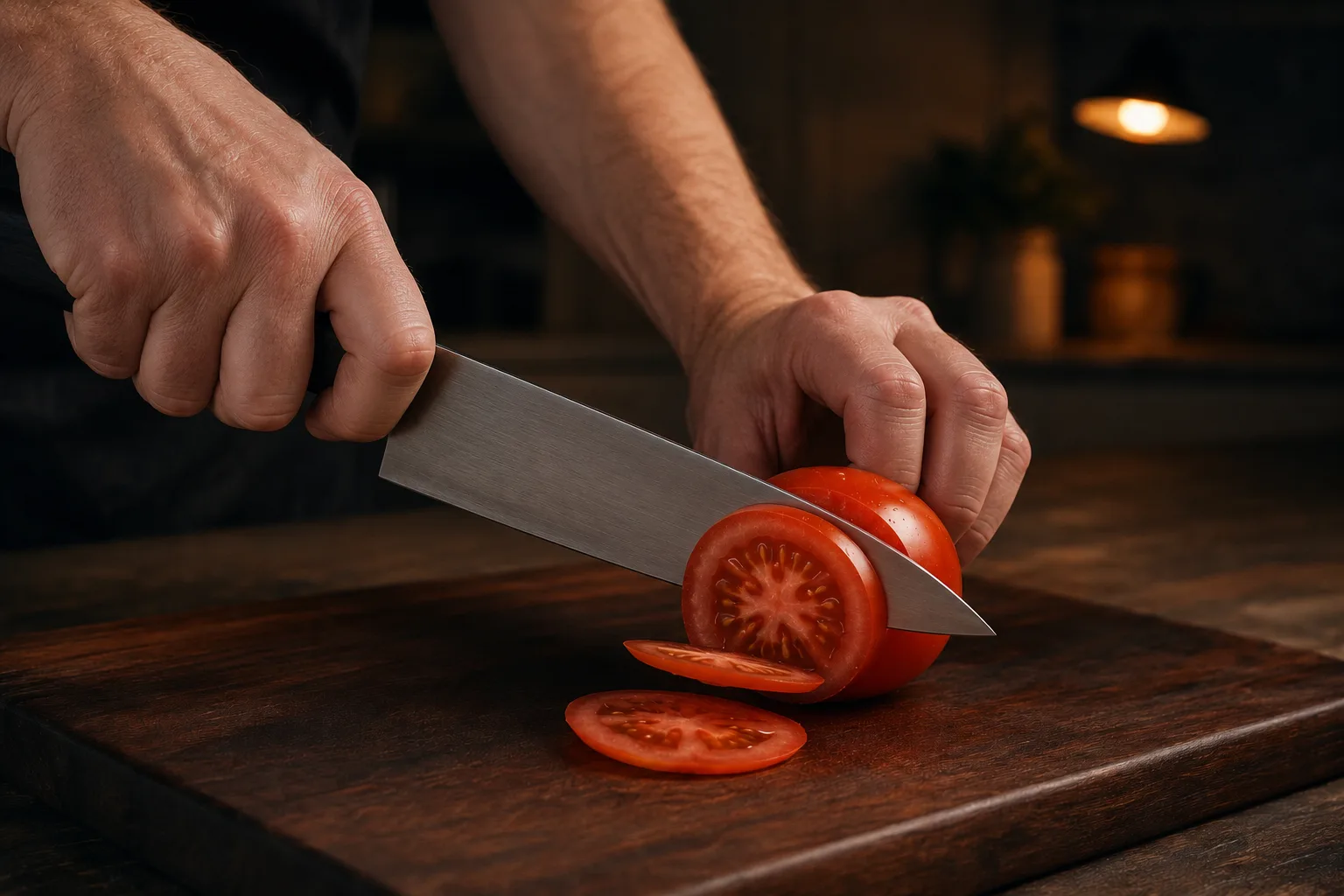
This is our go-to. Can your chef's knife slice through the skin of a ripe tomato without any resistance, pushing, or tearing? A truly sharp knife will glide right through, leaving a clean cut with minimal pressure. If it slips, drags, or requires you to saw, it's dull. You can even try our Two Tomato Test for a more scientific approach to assessing sharpness.
The Paper Test:
Hold a piece of paper vertically by one edge. A truly sharp knife should be able to slice through it effortlessly, from top to bottom, without snagging or tearing the paper. Don't saw at it; just try to slice straight down. If it folds the paper or catches, it's not sharp enough.
The Onion Test:
Ever notice yourself tearing up more than usual when slicing onions? A dull knife crushes the cell walls of the onion instead of cleanly slicing them. This releases more of the irritant compounds into the air, making your eyes water. A sharp knife makes quick, clean cuts, reducing the amount of 'tear gas' released.
Slipping on Soft Skins:
Trying to peel a capsicum or slice through the skin of a roasted chicken? If your knife is slipping and you feel like you're fighting the food, it's a clear sign the edge is gone. This is also a major safety hazard – a dull knife that slips is far more dangerous than a sharp one that bites.
Visual Inspection (Under Good Light):
Hold your knife with the edge facing up, pointing towards a light source (but be careful, obviously). Tilt the blade slightly. If you see any shiny spots along the very edge, that's a sign the edge has rolled over or chipped. A truly sharp edge should appear as a single, consistent line, not reflecting light back at you.
Realistic Sharpening Frequencies for Home Cooks
Alright, let's get down to the numbers. Based on how much you cook and how well you treat your knives, here’s a guide to how often you should be thinking about professional sharpening:
1. The "Every Night is Knife Night" Cook (Very Busy)
- Who: Someone cooking dinner for a family every night, batch prepping meals, or regularly hosting. You're using your main chef's knife for significant prep work 5-7 days a week.
- Examples: Sarah from our intro, keen home bakers who also cook savoury, parents with multiple hungry kids.
- Frequency: Every 3-6 months.
- Why: High usage means more opportunities for edge degradation. Even with good honing and cutting board practices, that edge will wear down faster. Aim for twice a year, maybe three times if you're a real kitchen warrior.
2. The "A Few Times a Week" Cook (Average Home Cook)
- Who: Someone cooking 3-4 dinners a week, maybe some weekend brunch. Your knives see regular, but not constant, action.
- Examples: Most couples, singles who enjoy cooking at home, people who eat out a few nights a week.
- Frequency: Every 6-12 months.
- Why: Regular use will still dull the edge, but at a slower rate than the daily cook. Aim for once a year, maybe a bit sooner if you notice resistance on tomatoes before then.
3. The "Weekend Warrior / Light User" Cook
- Who: Someone who mostly eats out or relies on ready meals during the week, but enjoys cooking on weekends or for special occasions. Your knives get used 1-2 times a week at most.
- Examples: Busy professionals, students, people new to cooking.
- Frequency: Every 12-18 months.
- Why: Low usage naturally means the edge lasts longer. But don't forget about it entirely! Even unused knives can dull slightly from oxidation or accidental knocks.
What About Specific Knife Types?
- Thinner Japanese Blades (e.g., Shun, Global): These often have a harder steel and a thinner edge profile. While they can take a truly razor-sharp edge, they can also be more prone to micro-chipping if used improperly or on hard surfaces. They might benefit from sharpening at the shorter end of your usage frequency range.
- Robust German Blades (e.g., Wüsthof, F. Dick, Victorinox): These are often made from slightly softer, tougher steel with a thicker edge. They might feel like they hold an edge longer because they're less likely to chip, but the edge still rolls and dulls. They're generally more forgiving, so they might tolerate being at the longer end of your range.
- Paring Knives & Utility Knives: These often get used for smaller, fiddlier tasks and less heavy chopping. Their frequency might align with your chef's knife, or slightly less often if they're used very sparingly.
Why Honing Isn't Sharpening – And Why It Matters
Many people confuse honing with sharpening, and that's usually why their knives never seem truly sharp. A honing steel (that rod you see chefs use) doesn't remove metal to create a new edge. What it does is realign the existing, microscopically bent edge. Think of it like a deck of cards that's been shuffled – honing puts them back in a neat stack. It prolongs the sharpness you already have, but it won't bring a truly dull knife back to life. For that, you need sharpening.
Regular honing is crucial for extending the life of your professional sharpen. If you hone your knives every few uses, you'll find you can push out that sharpening interval quite a bit. If you never hone, your edge will roll over faster, and you'll be back at the sharpener sooner. We’ve covered this in more detail on our FAQ page if you want to dive deeper.
The SharpenIt Difference: Protecting Your Investment
When you do send your knives for sharpening, you want to make sure the job is done right. A quick grind on a hot bench grinder might make it "sharp" for a day, but it'll damage the steel and shorten your knife's life. We see knives ruined by cheap grinders all the time.
Our method focuses on protecting your knives while delivering a superior edge:
- Water-Cooled Precision: We use slow-turning, water-cooled wheels. This is critical. It means zero heat gets to the blade's edge. Your knife's factory heat treatment – what makes it hold an edge in the first place – stays intact. Hot grinders push the steel past its tempering temperature, ruining it permanently.
- Consistent Angle Geometry: An angle jig holds the blade perfectly steady. This means the bevel comes out flat and even, every single time. No scalloping, no rounding, no grinding away precious blade life. This consistency also means your knives will be easier to sharpen the next time, as we're just refining the same geometry.
- Polished, Not Just Ground: We finish every knife by hand on a leather honing wheel with polishing compound. This is the step that takes a "sharp" knife and makes it "razor sharp." It's what gives you that effortless glide through a tomato and a truly refined edge that lasts. Most budget services skip this, leaving a coarser, less durable edge.
We don't sharpen serrated knives or bread knives. Our focus is on getting that perfect, smooth, keen edge on your chef's knives, santokus, paring knives, and utility blades.
So, whether you're a daily dynamo like Sarah or a weekend enthusiast, paying attention to your knife's performance and following these guidelines will keep your kitchen running smoothly and safely. Don't wait until your knives are tearing paper to send them in.
Ready to get your knives back to better-than-new sharpness? Visit our order page to arrange a mail-in service from anywhere in Australia or a local pickup if you're near Arcadia Vale.