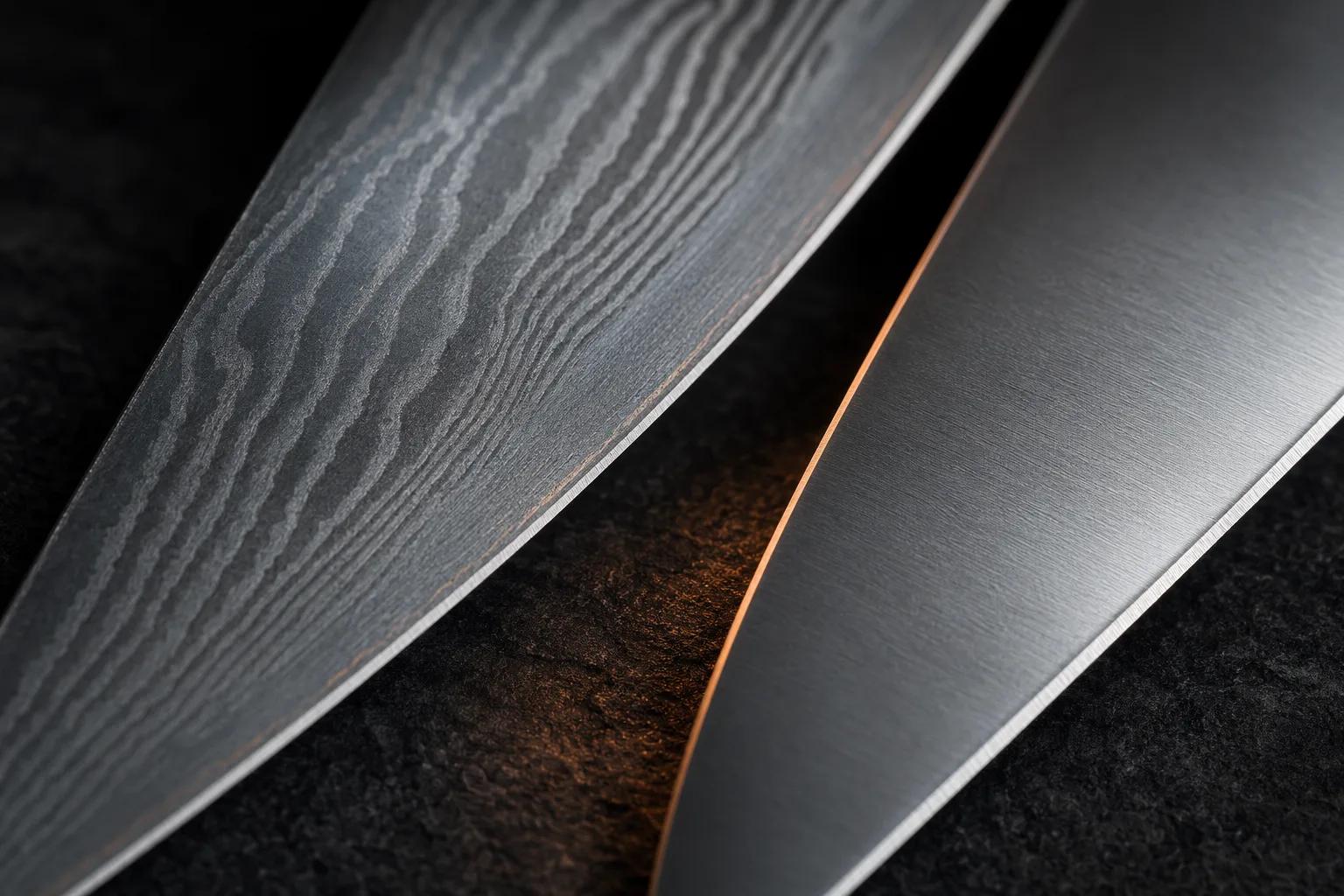
Kitchen Knife Steel Types: Sharpening Secrets for Home Cooks
2026-07-19 · Emile
Most home cooks let their knives go for 14 months, easy. That’s just an average from what we see come through the workshop. They use a dull knife for over a year, hacking away, before they finally give up and send it to us. Sometimes, they even buy a new knife, thinking the old one is "just worn out." The truth is, how long a knife holds an edge, and how it feels when it's cutting right, comes down to one thing: the steel it's made from.
You probably own a mix of kitchen knives. Maybe a German-made chef's knife, a sleek Japanese santoku, and a few budget utility knives picked up at the local department store. Each of these knives, despite looking similar, is fundamentally different in its very core: the steel. And understanding these differences isn't just for knife nerds; it's crucial for how you use, care for, and most importantly, sharpen your knives.
Here in Australia, we see a pretty consistent pattern in the kitchens we service. Most home cooks, without even realising it, are using knives made from one of three main types of steel. Knowing what you've got is the first step to getting the most out of your blades and keeping them sharp.
What Most Home Cooks Get Wrong About Knife Steel
The biggest mistake people make is treating all knives the same. They assume a cheap utility knife can be sharpened like a Wüsthof, or that a delicate Shun needs the same rough-and-tumble care as a Victorinox. This mindset leads to frustration, damaged blades, and a lot of wasted money. The steel dictates the knife's personality: how tough it is, how sharp it can get, how long it holds that edge, and how much abuse it can take before chipping or bending.
Every steel type has its strengths and weaknesses, and these directly influence our sharpening approach. We don't just put a generic edge on every blade; we tailor the process to the specific properties of the steel to get the best possible result.
The Workhorse: German Stainless Steel
If you own a classic chef's knife from brands like Wüsthof, F. Dick, or many Victorinox models, you're likely holding a blade made from a medium-carbon German stainless steel alloy (often X50CrMoV15). These are the undisputed workhorses of kitchens worldwide, and for good reason.
Characteristics of German Stainless Steel
- Softer and Tougher: Compared to Japanese steels, German stainless is relatively softer. This isn't a flaw; it's a design choice. This softness makes the steel incredibly tough and resistant to chipping. If you hit a bone or accidentally twist the blade, it's more likely to bend or roll its edge than to chip.
- Good Edge Retention: It holds a decent working edge, perfectly adequate for general kitchen tasks. You won't get the razor-thin performance of some Japanese blades, but it's consistent.
- Corrosion Resistant: The "stainless" part means it's highly resistant to rust and stains, making it low-maintenance.
- Easier to Sharpen: Its relative softness means it's quicker and easier to remove material and form a new edge. This makes it forgiving for home honing.
Sharpening Implications for German Steel
Because German steel is softer, it's more prone to rolling its edge. This means it needs more frequent honing to keep the edge aligned, and more frequent professional sharpening to reform the true bevel. Many home cooks try to sharpen these knives on cheap pull-through sharpeners, which often just grind away valuable steel or create a rounded, ineffective edge.
Our water-cooled sharpening system is ideal for German steel. It removes material efficiently without generating any heat, which is crucial. Overheating this steel on a dry grinder can soften it further, ruining its inherent toughness and ability to hold an edge. We restore the original, robust bevel geometry, allowing the knife to perform as intended – a resilient, sharp tool that can handle daily kitchen abuse without complaint.
The Performer: Japanese Stainless Steel
Knives from brands like Global, Shun, Miyabi, and many smaller artisan Japanese makers are typically crafted from harder, higher-carbon stainless steels. Think VG-10, AUS-8, SG2, or even powdered steels. These are designed for precision and extreme sharpness.
Characteristics of Japanese Stainless Steel
- Harder and Finer Grain: These steels are significantly harder than German counterparts. This allows them to be sharpened to a much finer, keener edge and hold that edge for a considerably longer time.
- Thinner Blades: Often, the steel's hardness allows manufacturers to grind the blades much thinner, enhancing their slicing ability.
- More Brittle: The trade-off for extreme hardness is increased brittleness. Japanese knives are more susceptible to chipping if dropped, twisted, or used on hard surfaces or against bone.
- Less Corrosion Resistant (sometimes): While still "stainless," some higher-carbon Japanese steels can be a bit more reactive than German ones and might show light staining if left wet.
Sharpening Implications for Japanese Steel
Sharpening Japanese steel requires a completely different approach. Their hardness means they take longer to sharpen, and the precision required is much higher. A casual approach with an inconsistent angle will quickly damage these delicate edges, leading to chips or a dull, rounded bevel.
This is where our consistent-angle jig truly shines. It allows us to create perfect, symmetrical bevels on these harder steels, without rounding the edge or removing too much material. The water-cooled system prevents any heat build-up, which is paramount for these heat-sensitive steels. Overheating can irrevocably damage the delicate microstructure that gives Japanese knives their superior edge retention. We finish with a meticulous polish, transforming the edge into a truly razor-sharp instrument that glides through ingredients.
If you've got a premium Japanese knife, don't risk it on a pull-through sharpener. You'll ruin it. These knives demand professional attention to maintain their incredible performance.
The Budget Champion: High-Carbon Stainless & "Mystery Metal"
This category covers a vast range of knives: your everyday utility knives, older chef's knives from less-known brands, and those kitchen sets that seemed like a bargain. These blades are often made from simpler high-carbon stainless alloys, sometimes just stamped "stainless steel" with no further details. Their quality can vary wildly, but they often share similar sharpening characteristics.
Characteristics of Budget Steel
- Variable Quality: Consistency in heat treatment and alloy composition can be hit or miss. This means two seemingly identical knives might perform differently.
- Softer than Premium: Generally softer than even German stainless, making them quick to dull but also relatively easy to sharpen.
- Prone to Rust/Stains: While still 'stainless,' they often have less chromium than premium steels, making them more susceptible to rust spots or discolouration if left wet for too long.
- Thicker Edges: Often ground with thicker, less refined edges from the factory.
Sharpening Implications for Budget Steel
Many people assume these knives aren't worth sharpening. That's a myth. While they won't ever hold an edge like a Shun, a well-sharpened budget knife can be surprisingly effective and a joy to use. The challenge is often that they arrive in our workshop in terrible condition: severely dull, chipped, or with grossly rounded edges from years of neglect or improper home sharpening attempts.
Our process can bring these knives back from the dead. The water-cooled wheel allows us to efficiently remove damaged material and re-establish a proper edge without any risk of overheating the often inconsistent factory heat treatment. The angle jig ensures we create a clean, consistent bevel, even on blades that started with a very rough factory grind. We can transform a frustratingly dull budget knife into a perfectly functional, sharp tool that's far better than it was new.
It's important to set expectations: a budget knife will still dull faster than a premium one. But with proper sharpening, it can perform its job admirably and save you from having to replace it every year. For more information on identifying your knife type and general care, check out our FAQ section.
Why Our Sharpening Method Works for ALL These Steels
No matter what steel your kitchen knives are made from, our sharpening method is designed to get the absolute best out of them while preserving their longevity. We don't just make them "sharp"; we make them functionally superior.
- Zero Heat to the Edge: This is non-negotiable. Our slow-turning, water-cooled wheel ensures the factory heat treatment that allows the steel to hold an edge stays intact. Hot bench grinders, common in many cheap services, push the edge past its tempering temperature in seconds, permanently ruining the steel's ability to hold an edge, especially on softer or budget steels.
- Perfect Bevel Geometry: An angle jig holds the blade at a fixed, precise angle for every pass. This means the bevel comes out flat, even, and consistent. No scalloping, no rounding, no over-grinding away the blade's life. This precision is critical for maintaining the thin, sharp edges of Japanese knives and for restoring the robust geometry of German and budget blades.
- Polished, Not Just Abraded: We finish every knife by hand on a leather honing wheel with polishing compound. This isn't just about shine; it's the difference between "sharp" and "razor sharp." This step refines the microscopic edge, making it incredibly smooth and able to slice with minimal resistance. Most budget services skip this crucial step, leaving you with an edge that feels sharp but lacks true cutting performance.
We don't sharpen serrated knives or bread knives – those are different beasts that require a completely different approach we don't offer.
Don't Guess Your Steel — Get It Right
Understanding the type of steel in your kitchen knives helps you appreciate their performance and care for them properly. Whether you've invested in premium Japanese steel or rely on trusty German workhorses, every knife deserves a proper, professional edge. It makes cooking safer, more efficient, and genuinely more enjoyable.
Stop struggling with dull knives. Let us bring your kitchen knives back to life, no matter their steel type. We'll give them an edge that performs where they should be, restoring their true potential.
Ready to experience true sharpness? Order your knife sharpening service today.