Signs Your Kitchen Knife Needs Sharpening, Not Just Honing
2026-07-19 · Emile
You grab a ripe tomato, ready to slice it thin for a salad. You press down, expecting that clean, satisfying *snick* as the blade glides through the skin. Instead, there's a shudder, a squish, and the tomato collapses under the pressure, guts spilling out. That, right there, is the unmistakable sign of a truly dull knife.
Every home cook knows the frustration. That moment you realise your trusty chef's knife isn't doing its job anymore. But what's the real problem? Does it just need a quick run over the honing rod, or has it gone past that point and actually needs a proper sharpen? It's a question we get asked all the time.
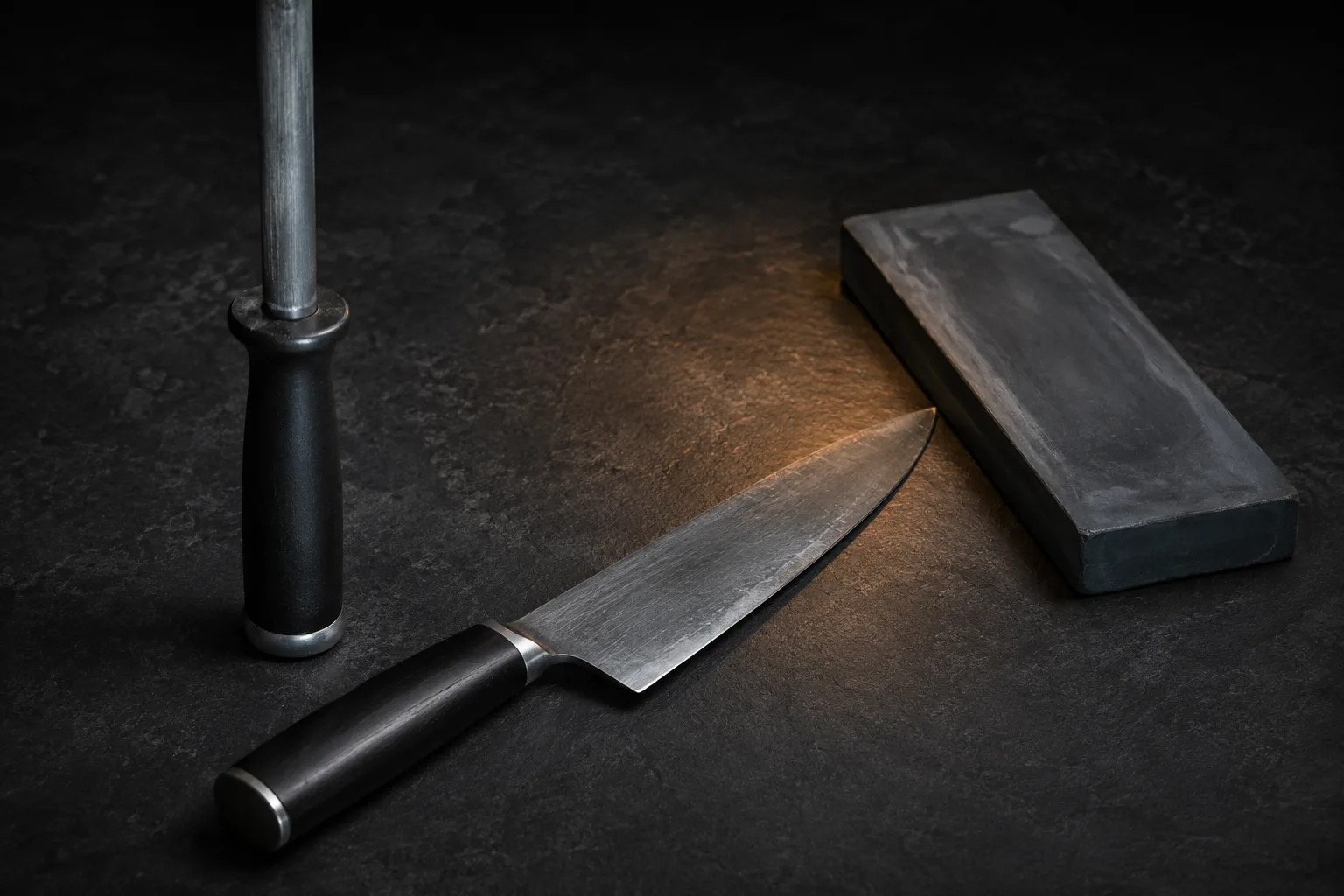
The difference is critical. A honing rod doesn't sharpen your knife. It realigns a microscopic, rolled-over edge. Think of it like straightening a bent fence post. Sharpening, on the other hand, is like putting up a whole new fence. It removes a tiny amount of steel to create a brand-new, perfect edge. Most home cooks wait too long between proper sharpenings, trying to make the honing rod do a job it's not designed for. Let's talk about how to tell when it's time to stop honing and send that blade to a pro.
The Classic Tomato Test: Your First Port of Call
The tomato test is the easiest, most reliable indicator for a home cook. Grab a ripe, firm tomato – not a rock-hard green one. Place it on your cutting board. With your knife, try to slice through the skin with minimal downward pressure, using a gentle drawing motion. Don't press hard, just let the edge do the work.
- If it's sharp: The blade will bite into the skin immediately and slice through with ease. You'll feel a clean cut, almost no resistance.
- If it's dull: The blade will slide on the skin, squishing the tomato before it cuts. You'll have to apply significant downward pressure, or saw back and forth aggressively, just to break the surface. This is a clear sign your knife needs a proper sharpen.
You can try this with other soft, tricky foods too. Think bell peppers (capsicums), onions (does it slip when you try to start the first cut?), or even delicate herbs like parsley. If your knife struggles to make a clean incision without bruising or tearing, it's telling you something.
The Paper Test: The True Litmus for a Razor Edge
Once you've tried the tomato test, the paper test is the next step for a more definitive answer. This one tells you if your knife is truly *sharp*, not just 'sharp enough'.
Hold a piece of standard printer paper (A4 is fine) upright by one edge. With your knife, try to slice into the paper, starting a few centimetres from your hand. Angle the blade slightly, around 45 degrees, and draw it downwards through the paper. Don't saw or force it – let the edge do the cutting.
- If it's sharp: A truly sharp knife will slice through the paper cleanly, smoothly, and without snagging. It'll feel like cutting butter. You should be able to make long, continuous cuts.
- If it's dull: A dull knife will either buckle the paper, tear it, or simply slide off without cutting. It won't bite into the paper cleanly. If you have to saw at it, it's not sharp enough.
This test is a favourite of butchers and chefs because it's so objective. A knife that passes the paper test easily is genuinely sharp and ready for serious work.
Beyond the Tests: What a Dull Knife Feels Like to Use
Beyond specific tests, there's a general feeling you get from using a dull knife. It's not just about what it *can't* do, but how it *feels* when you try.
More Effort, Less Control
You find yourself pressing harder, forcing the blade through food. This isn't just inefficient; it's dangerous. When you apply more pressure, you lose fine control, and the risk of the knife slipping and cutting you goes way up. A sharp knife does the work for you; a dull one makes you do all the work.
Bruised Food and Messy Cuts
Ever notice your herbs look bruised after chopping? Or your vegetables have ragged, torn edges instead of clean cuts? That's your dull knife tearing fibres instead of slicing through them. This affects not only the appearance of your food but also its texture and how quickly it spoils. Delicate ingredients suffer the most.
Fatigue and Frustration
Cooking should be enjoyable. Constantly battling a blunt knife saps the joy out of prep work. Your hand gets tired, your shoulder aches, and what should be a quick task becomes a chore. It's a sign your knife is working against you, not with you.
Why Your Honing Rod Isn't Fixing the Problem Anymore
We've said it before, but it bears repeating: a honing rod is not a sharpener. It's a maintenance tool. Your knife edge, under regular use, can microscopically bend or roll over. A honing rod (whether ceramic, steel, or diamond) straightens that edge back into alignment. It’s like combing stray hairs back into place.
However, if the edge is genuinely worn down, chipped, or has lost its original bevel geometry, a honing rod won't do a thing. You can rub that knife on a honing rod all day, but if the steel itself isn't forming a keen edge, you're just polishing a blunt instrument. That's when you need professional sharpening – to remove the old, worn-out steel and create a brand-new, perfectly angled edge from scratch.
Think about it: if you're honing before every use, and the knife still feels dull after a week or two of regular cooking, you're past the point of maintenance. You need a proper resharpening.
The Dangers of a Dull Knife (It's More Than Just Annoying)
This isn't just about making your life easier in the kitchen. A dull knife is actually more dangerous than a sharp one. It sounds counterintuitive, but it's true, and it's something we preach all the time.
- Increased Slippage: Because you have to apply more pressure to cut with a dull knife, there's a higher chance it will slip off the food and onto your fingers. A sharp knife bites in immediately and requires less force, giving you more control.
- Fatigue and Loss of Control: As mentioned, fighting a dull knife leads to hand fatigue. A tired hand is a less controlled hand, increasing the risk of an accident.
- Awkward Cutting Positions: You might find yourself contorting your hand or body into unsafe positions to compensate for the knife's poor performance, again, upping the risk of injury.
Investing in sharp knives is investing in kitchen safety. If you've ever had a close call with a dull blade, you know exactly what we're talking about.
When to Stop Guessing and Call a Professional
If your knife fails the tomato test, struggles with the paper test, and generally makes you swear under your breath while cooking, it's time for a professional sharpening. Trying to fix a truly dull knife with a pull-through sharpener or a honing rod will only lead to frustration, potential damage to your knife, and a less enjoyable cooking experience.
A good sharpening service, like ours, doesn't just make your knife "sharp." We restore the blade's original geometry without overheating the steel – which is crucial for its longevity – and then finish it by hand on a leather honing wheel. This gives you an edge that's often sharper than when the knife was brand new, maintaining the factory heat treatment and giving you perfect bevel geometry. We don't do bread knives or other serrated knives, by the way – they're a different beast entirely and usually not serviceable in the same way.
Don't wait until your knife is completely useless. Regular professional sharpening, combined with proper honing between sharpenings, will keep your knives performing at their best for years. If you're unsure about the difference or have other questions about knife care, check out our FAQ section.
If your knives are showing the signs of true dullness, it's time to get them properly sharpened. We'll bring them back to life, so you can enjoy cooking again.
Ready to get your knives properly sharp again? Place your order today.