Knife Longevity: Why Your Cheap Chef's Knife Can Last Longer
2026-07-19 · Emile
Most home cooks let their knives go for 14 months before getting them sharpened. That's not a guess; it's what we see in the workshop every day. What happens in those 14 months is usually a slow, painful death for the edge, no matter how much you paid for the knife.
You might think your $400 Japanese chef's knife is built to last forever, while that $40 Victorinox Fibrox is just a workhorse. The truth is, if you neglect the expensive blade and properly maintain the cheap one, the Victorinox will be cutting tomatoes cleanly long after the Shun or Global has become a dull, chipped paperweight. It all comes down to understanding what an edge needs, and what destroys it.
The Myth of the "Forever Sharp" Knife
There's a common belief that if you spend enough money on a knife, it'll just stay sharp indefinitely. People drop hundreds on a Wüsthof Classic or a Global G-2, expecting it to slice through anything effortlessly for years without a second thought. That's a myth, plain and simple. No knife, not even one forged by ancient samurai, holds an edge forever.
Those high-end knives often use harder steels like VG-10 or SG2. These steels are designed to take a very fine edge and hold it for a long time. The flip side? They're often more brittle. Drop a dull, hard-steel knife, or hit a bone the wrong way, and you're not just dealing with a dull spot; you're looking at chips that can be a real headache to fix. A softer steel, like the one in a Victorinox, might dull a bit faster, but it's more forgiving. It bends, it doesn't break, and it's easier to bring back to life.
The point is, a knife's price tag doesn't buy you eternal sharpness. It buys you potential. That potential is wasted if you don't look after it.
What Actually Kills a Knife's Edge (Fast)
Before we talk about sharpening, let's talk about the everyday habits that turn any knife, cheap or expensive, into a butter knife faster than you can say "chopping board."
Hard Cutting Surfaces
This is probably the biggest culprit. Glass, ceramic, stone, marble, stainless steel — if it's harder than your knife's steel, it's going to wreck the edge. Every single time your blade hits one of these surfaces, you're either rolling the edge over or chipping microscopic pieces off. It's like dragging your car tyres over broken glass repeatedly. They won't last.
Always use a cutting board made of wood or good quality plastic. They absorb the impact and let the blade do its job without taking damage. We see knives come in with edges completely destroyed because they've been used on a ceramic plate for slicing a baguette. Don't do it.
Dishwashers
Putting a good knife in the dishwasher is a cardinal sin. It's not just the harsh detergents that can stain or pit the steel and dull the handle; it's the physical abuse. Knives rattle around, bumping into other cutlery, mugs, and plates. Every bump is another micro-chip or ding on that fine edge. Plus, the high heat can be brutal on the handle materials, causing them to crack or loosen over time.
Hand wash your knives. It takes 30 seconds. Dry them immediately. This simple habit will add years to their life and keep them looking good.
Improper Storage
Throwing knives into a drawer with other utensils is asking for trouble. Edges get knocked, handles get scratched, and it's a safety hazard when you're rummaging around. Those delicate edges are constantly rubbing against other metal, dulling them incrementally every day.
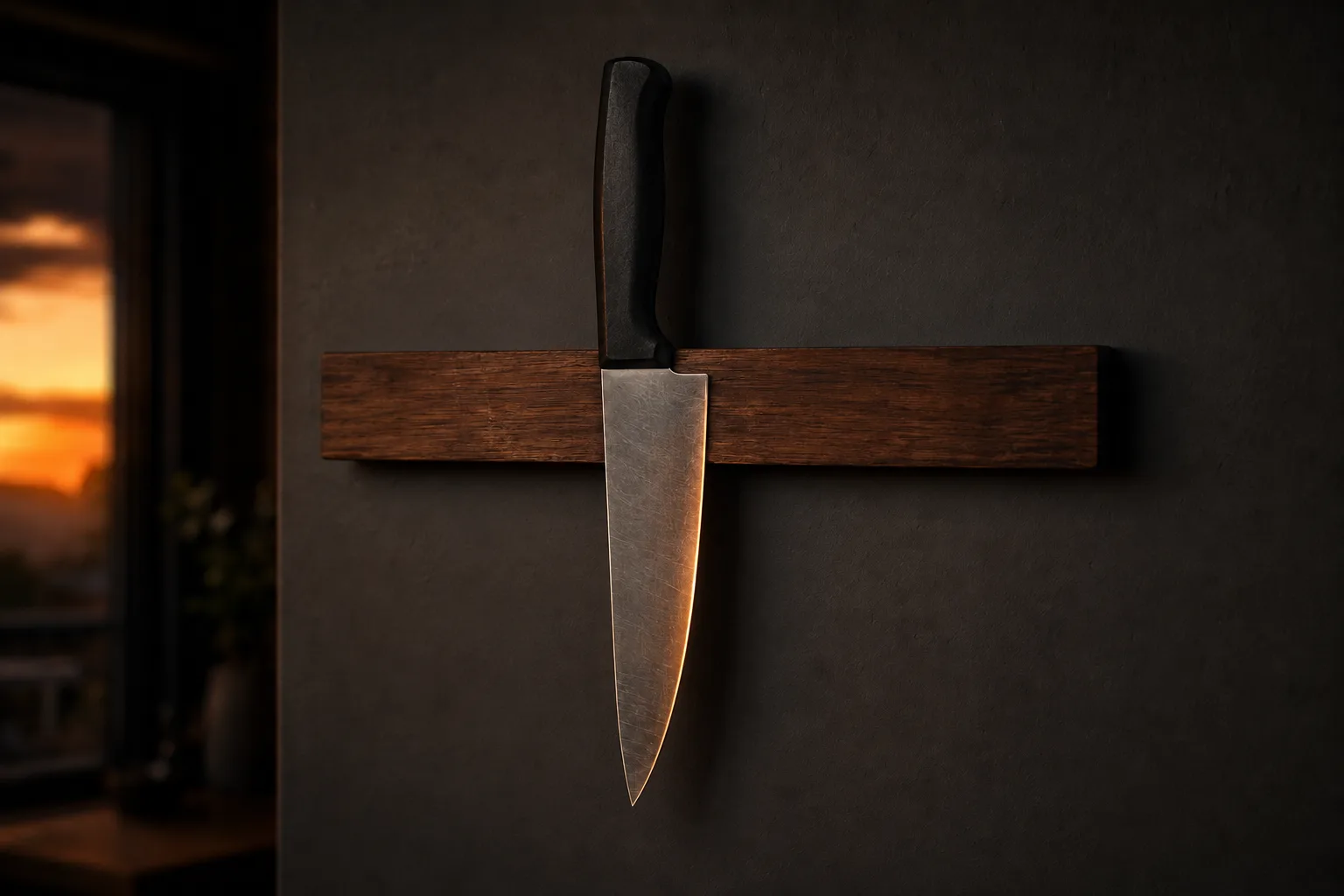
Use a magnetic strip, a knife block, or a dedicated in-drawer knife tray. Keep those edges protected and separated. It's not just about safety; it's about preserving the blade.
Neglecting Sharpening (The Big One)
This is where most home cooks go wrong. They might hone their knives on a steel now and then (which is good, but not sharpening), but they never get a true edge restoration. A dull knife is not just annoying; it's dangerous. You have to apply more force, which means less control, and that's how accidents happen.
Letting a knife get truly blunt means when it finally comes in for sharpening, we have to remove more steel to establish a new, clean edge. This takes more time, more skill, and ultimately, shortens the overall lifespan of the blade because more metal is removed. Regular, professional sharpening means less material removal each time, preserving the knife for generations.
Why a $40 Victorinox Can Outlast a $400 Wüsthof (Without SharpenIt)
Let's get specific. Take a Victorinox Fibrox chef's knife. You can pick one up for around $40-$60. The steel is relatively soft, but it's tough. It takes a decent edge easily and is forgiving if you hit something hard. It's the kind of knife that butchers and commercial kitchens use because it holds up to abuse and can be quickly touched up.
Now, compare that to a $400 Wüsthof Classic or a Shun Classic. These are beautiful knives. Wüsthof uses a harder German steel, and Shun uses very hard, multi-layered Japanese steel. They arrive incredibly sharp and can hold that edge for a good while if treated right. But here's the kicker:
If you take that $400 Wüsthof and use it on a ceramic plate, throw it in the dishwasher, store it loose in a drawer, and never get it properly sharpened for 14 months, it will be a wreck. The hard steel may chip, the edge may roll in sections, and when it finally comes in, it'll need significant work. If you then take it to a cheap sharpening service that uses a screaming-fast bench grinder, they'll burn the edge, ruin the heat treatment, and undo all the quality of that expensive steel in minutes.
On the other hand, if you take that $40 Victorinox, use it on a wooden board, hand wash it, store it safely, and get it professionally sharpened every 6-12 months, it will perform beautifully. It will outlast the abused Wüsthof because its basic, durable steel is being respected and maintained correctly. The quality of the knife doesn't guarantee longevity; the quality of the care does.
The SharpenIt Difference: Protecting Your Investment (Cheap or Expensive)
This is where professional sharpening isn't just about making your knife sharp again; it's about preserving its life. Our method is designed to protect your blade, whether it's a humble paring knife or a high-end Japanese gyuto.
We don't use dry, high-speed grinders that spit sparks and burn your blade. That kind of heat destroys the steel's factory heat treatment, making it unable to hold an edge ever again. Instead, we use a slow-turning, water-cooled wheel. This means:
- Zero heat to the edge: The water keeps the blade cool, so the steel's temper is completely preserved. Your knife's ability to hold an edge stays intact, just as the maker intended.
- Perfect bevel geometry, every pass: We use an angle jig that holds the blade at a fixed, precise angle. This ensures the bevel is flat, even, and consistent from heel to tip. No wavy, rounded, or over-ground edges. This consistency means less steel removal over the knife's life, as we're just refining the existing geometry, not reinventing it. You can learn more about why geometry matters on our FAQ page.
- Polished, not just abraded: After the grind, every knife gets finished by hand on a leather honing wheel with polishing compound. This step is crucial. It removes the burr (the tiny wire edge left by grinding) and polishes the edge to a mirror finish. This is the difference between "sharp enough" and "razor sharp," allowing for incredibly smooth cuts and extending the edge's life. Most budget services skip this critical step because it takes time and skill.
This approach protects the integrity of your knife's steel, ensuring that whether you paid $40 or $400, it performs at its best and lasts as long as possible. A Wüsthof or Shun sharpened correctly will hold an incredible edge. A Victorinox sharpened correctly will be a kitchen workhorse that never lets you down.
Extending Your Knife's Life: Beyond Just Sharpening
Sharpening is essential, but it's part of a bigger picture. To get the absolute most out of your knives and keep them performing year after year, remember these points:
- Use the right cutting board: Wood or high-quality plastic, always.
- Wash by hand: No dishwashers. Quick rinse, gentle scrub, immediate dry.
- Store properly: Knife block, magnetic strip, or drawer insert. Protect that edge.
- Hone regularly: A honing steel doesn't sharpen, but it realigns a slightly rolled edge between sharpenings. Do it often, gently. It delays the need for professional sharpening.
- Don't abuse them: Knives are for cutting food. Don't use them as screwdrivers, can openers, or pry bars.
A well-cared-for knife, regardless of its original price, is a joy to use. It's safer, more efficient, and makes cooking a pleasure. Neglected, even the most expensive blade becomes a frustration. Invest in good habits, and invest in proper sharpening.
Don't let your knives suffer for 14 months. Whether your knife cost you $40 or $400, proper care and professional sharpening will ensure it lasts a lifetime. Send them in or book a pickup. Get your knives sharpened today.